Reading
Things Worth Reading
A small, opinionated list. New links go in when something earns its place — not on a schedule.









































| Where to Park Emergency Funds: FD vs Savings Account Five expert views on FD's role as the liquidity tranche — what to hold in FD vs a savings account. | Mint | |
| Sukanya Samriddhi Yojana: safe, tax-free — but is the lock-in too long? A pointed look at the 21-year lock-in as a liquidity risk, not just a feature — the counterargument to the standard "just start early" advice. | Mint | |
| Shankar Sharma Compares Nifty 50 vs Bank FD Returns Over 12 Years Long-run return data that anchors the equity-vs-FD allocation debate; the results are more nuanced than most expect. | Mint | |
| Sukanya Samriddhi Yojana returns explained: What yearly investments can grow into Return tables at every common annual deposit level — useful to see how the compounding math plays out across the full contribution range. | Mint | |
| Bank FD vs SCSS: Which Investment Gives Better Returns Over 5 Years? Guides retirees on choosing the right debt instrument for the fixed-income slice of a retirement portfolio. | Mint | |
| FD Laddering Strategy: How to Split ₹10 Lakh for Better Returns and Liquidity How to allocate a corpus across three tenors for both yield and liquidity — the mechanics of a practical FD split. | Mint | |
| SCSS account rules: who can invest, how much interest you get and what tax applies Covers the November 2023 amendment allowing unlimited 3-year extension blocks, and confirms fixed interest credit dates: 1 April, 1 July, 1 October, 1 January. | Livemint | |
| Senior Citizen Savings Scheme (SCSS) 2026-27 — complete guide Cash deposit ceiling ₹1 lakh; full definition of 'retirement benefits'; SCSS peaked at 9.3% (FY 2012-13), floor 7.4% (April 2020–September 2022). Premature closure proceeds tax-exempt from August 29, 2024. | ClearTax | |
| NPS Sanchay vs APY: Which Pension Scheme Should Informal Workers Choose? Side-by-side comparison of the new NPS Sanchay (May 2026) and APY for unorganised sector workers — the trade-off between market-linked upside and guaranteed certainty. | Mint | |
| NPS Corpus Crosses ₹16 Lakh Crore: What the Numbers Mean for Your Retirement Contextualises the NPS AUM milestone with per-subscriber averages and explains why most accounts are still under-funded. | Business Standard | |
| NPS vs APY: A Numbers-First Comparison for the Unorganised Sector Deep-dive comparison using the same monthly contribution across both schemes — when the guaranteed pension beats market-linked returns and vice versa. | Freefincal | |
| ₹8,500 crore inflows in a month: Why multi-asset allocation is winning big in FY26 Multi-asset funds did the navigating in a year where no single asset class had a clear mandate. | Mint | |
| Growth vs dividend option in equity mutual funds explained: Which one should you choose? IDCW doesn't pay you 'extra' — it hands back your own NAV at slab rates. Growth wins on math and tax. | Mint | |
| Physical gold vs gold ETF vs SGB vs digital gold: How tax differs across yellow metal investment modes in India Same yellow metal, four very different tax outcomes — pick the wrapper, not just the gold. | Mint | |
| Investing in FDs via Digital Platforms Offers Wider Choice, Easy Access Covers the operational side of executing a multi-bank ladder: aggregator platforms that simplify spreading FDs across institutions. | Business Standard | |
| NPS Vatsalya vs Sukanya Samriddhi Yojana: What to choose for your children? Side-by-side on eligibility, returns, tax benefits, and flexibility — useful for parents weighing SSY against the newer market-linked alternative. | Mint | |
| Sukanya Samriddhi, provident fund, bank deposits, mutual funds — compare investments for your child A multi-asset comparison for child-goal investing: where SSY fits against FDs, RDs, PPF, and equity mutual funds across horizon and risk appetite. | Mint | |
| Sukanya Samriddhi: How to withdraw full or partial amount before the 21-year tenure Step-by-step guide to partial withdrawal at 18 for education and full closure at 18 for marriage — the mechanics most guides leave vague. | Mint | |
| Senior Citizen Savings Scheme vs Fixed Deposits: which gives better interest rates over a five-year period? Side-by-side rate comparison across SBI, HDFC, ICICI and Axis. Notes that SCSS qualifies for Section 80C deduction while a regular bank FD does not, widening the effective yield gap. | Livemint | |
| SCSS vs SSY vs SBI FD vs PPF: returns, lock-in, tax benefits and who should invest SCSS and SSY are the only government small-savings schemes both at 8.2%; PPF (7.1%) and NSC (7.7%) offer EEE benefits but with much longer lock-ins. | Livemint | |
| SCSS monthly income guide: what ₹10 lakh, ₹20 lakh and ₹30 lakh investments can earn safely in retirement Clear income ladder: at 8.2% p.a., ₹10L generates ≈₹6,834/month, ₹20L ≈₹13,667/month, ₹30L ≈₹20,500/month — rate locked regardless of future RBI moves. | Livemint | |
| NSC vs PPF: Which is a better long-term savings option for tax saving? Rate gap and 80C treatment compared side-by-side: why 60bps higher rate on NSC matters less than the 15-year vs 5-year horizon difference. | Mint | |
| Atal Pension Yojana: 5.25 Crore Subscribers and Growing, But Tax-Payer Exclusion Bites Analysis of APY's subscriber growth and the October 2022 income-tax payer exclusion — who is being left out and why. | Economic Times | |
| Should You Open APY or NPS? The Decision Framework A practical decision tree: income-tax payer status, age, employer matching, and risk tolerance — each points to a clear scheme choice. | Jagoinvestor | |
| Nifty Down 24% Notionally in 18 Months: Best Time to Buy Stocks or Do Averaging? ET Wealth examines whether a prolonged Nifty correction is the right trigger to average down — and what conditions should govern that decision. | Economic Times | |
| FD vs Debt Fund vs Bonds: Which Is Actually Safer? From a SEBI-registered fee-only planner: where FDs fit versus debt mutual funds and bonds within the debt allocation of a portfolio. | Basunivesh | |
| SSY maturity rule: If you start investing ₹1.5 lakh at age 10, when will you get ₹72 lakh? Shows how the age at which you open the account changes the final corpus — the compounding cliff that makes an early start so disproportionately valuable. | Mint | |
| Best fixed-income investments in today's volatile market: PPF, SSY, SCSS, EPF and Post Office schemes compared Why sovereign-backed fixed-income matters during equity volatility — SCSS scored alongside EPF and Post Office schemes in one scorecard. | Livemint | |
| NSC interest rate 2026: Should you invest in National Savings Certificate now? Rate confirmation at 7.7% for Q1 FY 2026-27 with a plain-language explainer on the annual compounding and five-year maturity mechanics. | Economic Times | |
| 80CCD(1B) Deduction: How the Extra ₹50,000 for NPS/APY Saves Tax at Every Slab Worked examples of the exclusive ₹50,000 deduction under 80CCD(1B) — the primary tax reason to open NPS or APY. | Financial Express | |
| Sukanya Samriddhi completes 11 years: How can you get ₹72 lakh on maturity for your daughter? Milestone coverage with updated projections — a good data-point anchor for how much the scheme has grown since its 2015 launch. | Economic Times | |
| Budget 2026 impact on small savings: NSC, PPF, SCSS rates unchanged Post-budget confirmation that government small-savings rates were not revised — context for why 7.7% remains locked for Q1 FY 2026-27. | Financial Express | |
| The Triple-Tax Advantage: Why Sukanya Samriddhi Yojana is still the best 80C investment in 2026 The EEE status argument made explicitly for the new-tax-regime era — why SSY's exempt-exempt-exempt structure is rare even among small savings options. | Financial Express | |
| How to earn ₹50,000 monthly income with SCSS, POMIS and bank fixed deposits in 2026 Combines SCSS quarterly payout, POMIS monthly payout and FD interest for a blended ₹50,000/month plan. Both spouses can each invest up to ₹30L independently. | Livemint | |
| Rs 2.46 lakh yearly income from SCSS: how senior citizens can earn regular interest income Covers two edge cases: excess deposits over ₹30L earn only the POSA rate (4%) until returned; on account holder's death, the account earns POSA rate from the very next day. | Economic Times | |
| NSC vs ELSS: Which 80C investment option should you choose? Risk-adjusted comparison: NSC's guaranteed 7.7% versus ELSS's market-linked returns — relevant for investors choosing between the two for 80C optimisation. | Business Standard | |
| Not in FDs: Here's Where India's Rich Actually Park Their Short-Term Money Reveals the instruments HNIs use instead of FDs for short-term allocation — useful for understanding the opportunity cost of defaulting to FDs. | Business Standard | |
| Nearly 176 Debt Funds Offer Returns Over FDs in 2 Years. Should Investors Rethink Allocation? Direct comparison of debt fund returns vs FDs over a 2-year horizon — anchors the core allocation question with fresh return data. | Economic Times | |
| Why Splitting Fixed Deposits Across Multiple Banks Doesn't Add Up Challenges the naive multi-bank diversification approach; explains when splitting banks vs splitting tenors is the right call. | Business Standard | |
| ₹50L, ₹75L or ₹1Cr: What is the maximum corpus you can build through SSY? Scenarios at different annual contribution levels — useful for setting realistic expectations about how much SSY alone can fund. | Economic Times | |
| SIF vs Mutual Fund vs PMS: Where Should the ₹10–50 Lakh Investor Put Their Money? Side-by-side of three product categories at the ₹10L–₹50L investment level, including tax treatment and liquidity differences. | Financial Express | |
| SIF vs PMS vs AIF: Which Alternative Investment Vehicle Is Right for You? Practitioner-sourced comparison of three regulated vehicles: minimum investment, redemption terms, and taxation — with specific focus on tax drag. | Economic Times | |
| FD Interest Rates: These 8 Banks Offer the Highest Returns Comparative rate data across tenors and banks — useful for choosing which banks to anchor each rung of an FD ladder. | Mint | |
| SSY interest rate 2025: What will be maturity amount if you invest ₹1.50 lakh/year? Projection at the maximum annual deposit: what the corpus looks like at 8.2% across a full 21-year horizon. | Economic Times | |
| Investment options for senior citizens in India — 2025 edition Defence personnel eligible from age 50 (not 55); deposit must come from retirement benefits within one month. Explains the SCSS vs POMIS trade-off: POMIS pays monthly, SCSS pays quarterly at a higher rate. | Freefincal | |
| SIF Category Goes Live: 11 AMCs Register, First NAVs Published Marks the go-live date for the SIF category: which AMCs filed first, what strategies were launched, and how to access them. | Mint | |
| SIF for the Indian Investor: Is Long-Short Worth the Higher Minimum? Quantitative analysis of whether the long-short overlay justifies the ₹10L minimum over a plain diversified equity MF. | Arthgyaan | |
| 5 reasons to prefer NSC over tax-saving FDs in FY 2025-26 Direct product comparison listing NSC's rate advantage, 80C multi-year structure, and sovereign guarantee as the three decisive factors over bank FDs. | Economic Times | |
| AIF vs PMS: How SEBI's SIF Changes the High-Net-Worth Investing Landscape Analyses how the SIF introduction reshapes the competitive dynamics among alternative investment products. | Mint | |
| Amid Global Risks, Indian Retail Investors Increase Allocation to Bonds and Fixed Deposits Data-backed piece on how retail investors are actively shifting toward FDs and bonds amid market uncertainty — with context on the size of the allocation shift. | Mint | |
| Last Chance to Book Fixed Deposits at These Interest Rates The case for locking in longer-tenure FDs before a rate cut — directly applicable to deciding the duration of each ladder rung. | Mint | |
| AIF Category III Taxation: Pass-Through Means You Pay at Your Slab Rate Explains the mechanics of Section 115UB pass-through taxation for AIF Cat III — essential background for understanding the SIF tax advantage. | Financial Express | |
| How to Invest ₹10 Lakh for Next 1, 3 or 5 Years for Higher Return and in Most Tax-Efficient Way Practical allocation guide across short-to-medium time horizons, with FDs featured prominently for the 1–3 year bucket. | Economic Times | |
| PMS vs AIF: Which Is Better for the HNI Investor in 2025? Detailed breakdown of PMS vs AIF Category III for investors above ₹50 lakh — covers governance, fee structures, and exit mechanics. | Business Standard | |
| SEBI Launches Specialised Investment Fund: What It Is and Who Can Invest First-wave coverage of the SEBI SIF circular: minimum ₹10 lakh, long-short mechanics, and the regulatory gap it fills between MF and AIF. | Economic Times | |
| What Is SEBI's Specialised Investment Fund and Should You Invest? Sober take from Pattu on the SIF framework: who it actually benefits, the risks of short exposure, and why most investors should wait. | Freefincal | |
| SEBI's New SIF: A Hedge Fund for the Masses at ₹10 Lakh Minimum Contextualises SIF as a deliberate effort to democratise hedge-fund-style strategies, with analysis of the regulatory implications. | Business Standard | |
| New rules for Small Savings Schemes: PPF to SSY changes effective Oct 1 The October 2024 regulatory changes: grandparent-to-parent guardian transfers, NRI PPF closure rules, and how irregular SSY accounts are now handled. | Business Standard | |
| SSY: Attractive scheme for a girl child, provided you don't mind the long lock-in A balanced evaluation: acknowledges the EEE tax advantage and guaranteed rate, then names the liquidity constraint as the central trade-off. | Business Standard | |
| Conservative Hybrid Funds Can Be a Better Bet Than Fixed Deposits The case for replacing part of your FD allocation with conservative hybrid funds — same risk bucket, better post-tax returns over 3+ year horizons. | Business Standard | |
| PMS vs Mutual Fund: The Tax and Return Argument No One Wants to Make Demolishes the PMS marketing pitch with actual post-tax return comparisons: MF wins for most investors at most time horizons. | Freefincal | |
| Does PMS Deliver Alpha Over Mutual Funds? The Evidence Statistical analysis of SEBI-reported PMS returns vs comparable mutual fund categories: the median PMS does not outperform after fees. | Arthgyaan | |
| Is Sukanya Samriddhi Yojana the best investment option for a girl child? A critical evaluation rather than a pure endorsement — examines scenarios where SSY is not optimal and what alternatives to consider alongside it. | Business Standard | |
| How is NSC interest taxed? Deemed reinvestment rule explained Step-by-step ITR treatment of NSC interest: which schedule to use, how the 80C claim and income declaration interact across five financial years. | Mint | |
| Sukanya Samriddhi Yojana (SSY): Tax benefits, interest rate, eligibility and other details ET Wealth's comprehensive explainer — the go-to reference for EEE status, Section 80C deduction, and account-opening rules all in one place. | Economic Times | |
| PPF, NSC, SCSS and Sukanya Samriddhi Yojana: a guide to must-haves in your portfolio Portfolio construction guide that positions SSY alongside PPF and NSC as the core small-savings holding — with clear rules for which instrument fits which goal. | Hindu Business Line | |
| Do You Invest in FDs or Real Estate? How to Develop a Framework for Fixed Income Allocation A structured framework for deciding how much of your portfolio belongs in fixed income: FDs, real estate, or bonds — and the logic behind each choice. | Economic Times | |
| Should You Opt for One Large Fixed Deposit or Multiple Smaller FDs? The foundational laddering question: when splitting your FD across tenors makes sense — and when a single large FD is simpler. | Business Standard | |
| Senior citizens can invest extra ₹15 lakh in SCSS from April 1, 2023 but PMVVY to close from same date Budget 2023 simultaneously closed PMVVY (LIC-managed monthly pension at 7.4%) and raised the SCSS ceiling to ₹30L to fill that gap. | Economic Times | |
| Stop Sitting on the Fence: Don't Let Your Money Sleep in Fixed Deposits! A direct challenge to over-allocation: why keeping too much in FDs is a risk in itself — purchasing power erosion, not volatility, is the real danger. | Freefincal | |
| How to Increase Equity Exposure in My Portfolio Loaded With Fixed Income? Practical steps to rebalance an FD-heavy portfolio toward equity — what to sell first, how fast to move, and how to avoid behavioural traps. | Freefincal | |
| Sukanya Samriddhi Yojana Interest Rate History 2015 to Present The complete rate table from 9.1% (January 2015) to 8.2% (January 2024 onwards) — essential context for understanding how the guaranteed rate has moved over a decade. | Freefincal | |
| National Savings Certificate (NSC): How is interest taxed each year? The clearest worked example of the deemed-reinvestment 80C rule: which ITR schedule to fill, when to declare income vs claim 80C, and what year 5 looks like. | Freefincal | |
| Is There a Place for High-Interest Rate Fixed Income Products in a Portfolio? Rules of thumb for sizing high-yield FDs: risky debt should be no more than 10–20% of the debt slice, not the whole of it. | Freefincal | |
| Rupee Cost Averaging via SIP Has No Benefit Other Than Accumulating MF Units M. Pattabiraman shows with Sensex data that the so-called averaging benefit of SIPs is a myth — returns and risk converge with the market regardless of how units were accumulated. | Freefincal | |
| How should senior citizens invest in 2022? Rate lock-in explained: a hike after you invest does not benefit you, a cut does not hurt you. Joint account interest is attributed to the first account holder for tax. | Freefincal | |
| The Dangers of Averaging Down Vishal Khandelwal argues that averaging down is dangerous when the underlying business is deteriorating — a core lesson Indian retail investors repeatedly ignore. | Safal Niveshak | |
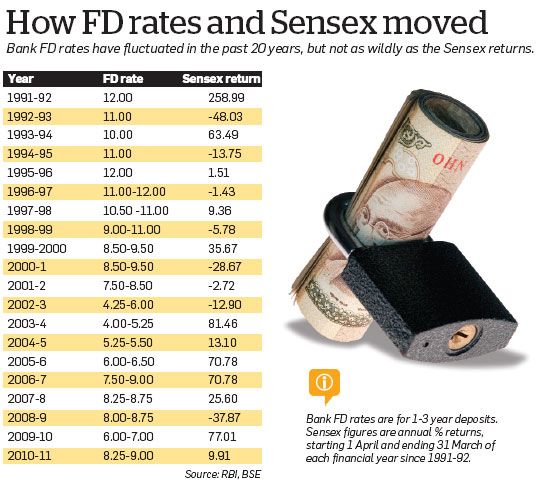
| Comparison of Fixed Deposits and Sensex Returns Examines the 100-minus-age rule directly with year-by-year FD vs Sensex return data — a useful empirical baseline. | Be Money Aware | |
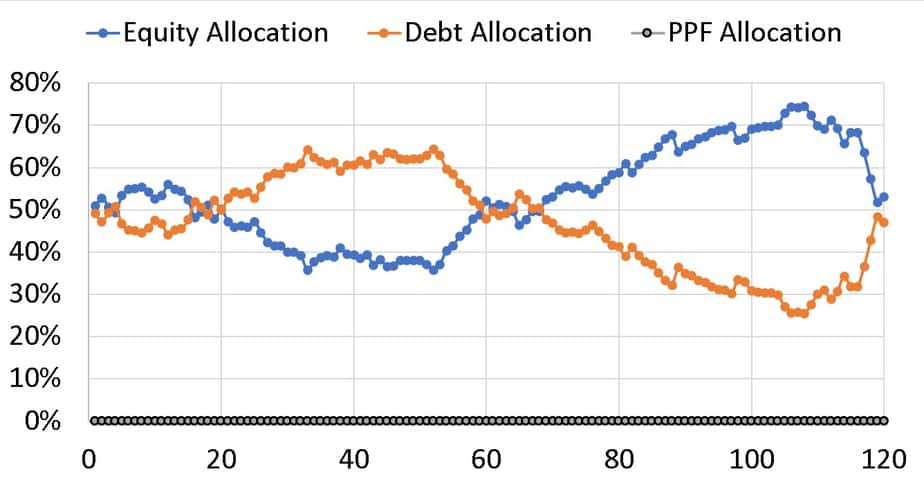
| Asset Allocation for Long-Term Goals Goal-based allocation from first principles: what share of a goal corpus should be in FDs vs equity as a function of time horizon and goal criticality. | Freefincal | |
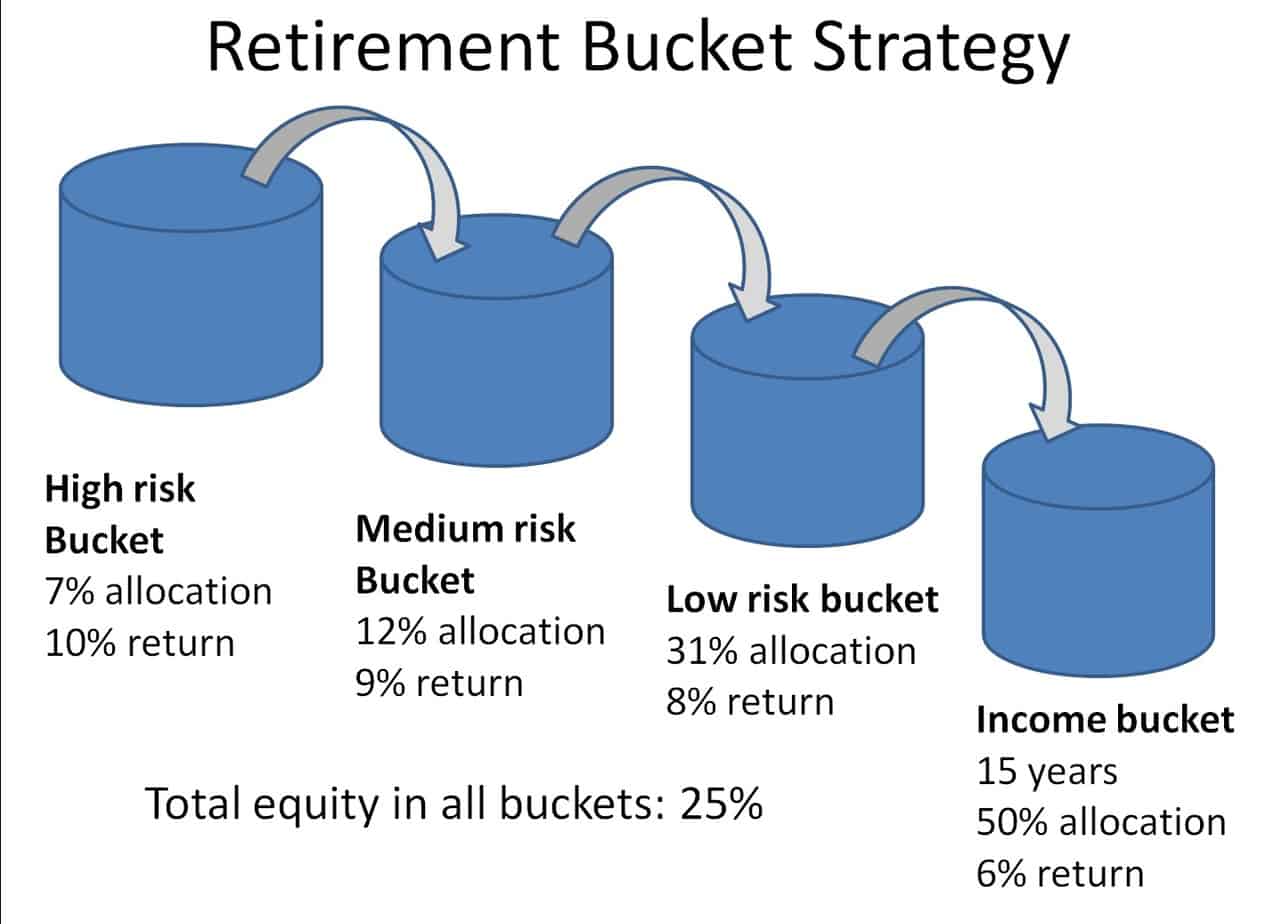
| How to Deploy Money in a Retirement Bucket Strategy Step-by-step guide to allocating a corpus across short-, medium-, and long-term buckets — a formal version of the FD ladder applied to retirement income. | Freefincal | |
| What Is a Retirement Bucket Strategy? How to Implement It? Explains the mechanics of time-segmented allocation: why having 2 years of expenses in liquid FDs protects you from selling equity in a crash. | Freefincal | |
| How to Create Retirement Buckets for Inflation-Protected Income Inflation-adjusted variation of the bucket strategy — how to structure FD rungs so the real value of your income stream holds over time. | Freefincal | |
| List of Investments Suitable for Building a Retirement Bucket Strategy Which instruments belong in each bucket: short-term FDs and liquid funds for Bucket 1; longer FDs, PPF, and debt MFs for Bucket 2. | Freefincal | |
| Sukanya Samriddhi Yojana vs PPF: An Illustration Numerical side-by-side with illustrated calculator output — the clearest worked example of how SSY and PPF diverge over a 21-year horizon at the same annual contribution. | Freefincal | |
| Why are PPF and Sukanya Samriddhi interest rates still so high?! Explains the g-sec + 0.75% rate formula that the government is supposed to follow — and documents the years when it has overridden the formula in both directions. | Freefincal | |
| NSC vs PPF: a detailed comparison with numbers Freefincal's side-by-side on horizon, liquidity, and post-tax returns — includes the 80C structure difference as a quantified advantage for the 5-year NSC. | Freefincal | |
| Mutual Fund vs Fixed Deposit — Where Should You Invest? Portfolio-construction guide on when FDs are the right call versus equity mutual funds, framed by goal horizon and risk appetite. | Arthgyaan | |
| Can You Retire by Keeping Money Only in FD or Pension? Explores the pros and cons of an all-fixed-income retirement portfolio: inflation risk, longevity risk, and the minimum equity exposure needed to survive 30 years. | Arthgyaan | |
| LIC Kanyadaan Policy vs Sukanya Samruddhi Yojana: Which is a better investment for my girl child? Direct comparison between SSY and LIC's endowment product targeted at girl-child goals — shows how insurance-linked savings products compare against the government scheme on returns and flexibility. | Freefincal | |
| What Is the Need for Debt Funds When We Can Invest in Safe Fixed Income? Argues that liquid debt alongside FDs is essential for rebalancing; illustrates why locking everything into FDs destroys purchasing power. | Freefincal | |
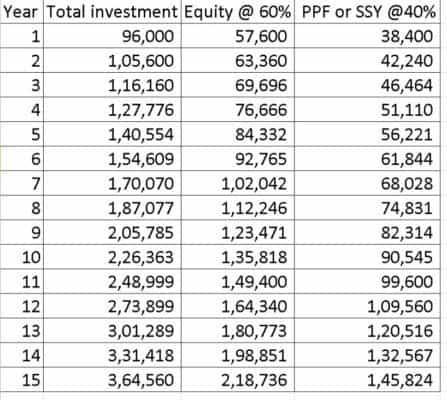
| Fixed Income Investment Options for Accumulating Retirement Corpus Uses 60% equity / 40% fixed income as the baseline and explains how that ratio should shift toward FDs as retirement approaches. | Freefincal | |
| NSC (National Savings Certificate): The complete guide End-to-end NSC reference: how to buy, premature closure rules, pledge for loans, and the ITR treatment of interest — especially useful for first-time NSC investors. | Jagoinvestor | |
| 2 Reasons Why You Should Stop Investing in Fixed Deposits Immediately A strong allocation case for shifting from FDs to debt mutual funds — covers post-tax returns, indexation benefits, and liquidity differences. | Jagoinvestor | |
| The Ultimate Guide to Safe Withdrawal Rates — Part 1: Introduction The most rigorous deconstruction of the 4% rule ever written — 50-part series by an ex-Google quant. | Early Retirement Now | |
| Should I Invest in a Debt Fund or Bank Fixed Deposit? PV Subramanyam's classic comparison: the post-tax return arithmetic that has driven the 'FD vs debt fund' allocation debate for over a decade. | Subramoney |
Nothing tagged that yet.
Last updated · site changelog